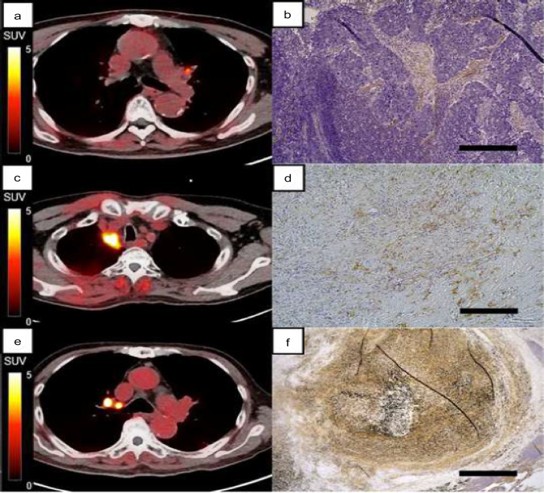
Helena Lanzafame, Ilektra A. Mavroeidi, Kim M. Pabst, Pedro Fragoso Costa, Martin Schuler, Sebastian Bauer, Jens Kurth, Martin Heuschkel, Jens T. Siveke, Ken Herrmann, Karina Kostbade, David Kersting, Stephan Leyser, Stefan Fröhling, Christoph E. Heilig, Rainer Hamacher and Wolfgang P. Fendler
Abstract:
Fibroblast activation protein (FAP) is highly expressed in many cancers, especially sarcomas, and represents a promising theranostic target. We present an updated retrospective analysis of 90Y-FAP inhibitor (FAPI)–46 treatment in patients with sarcoma or other solid tumors.
Methods:
We performed monocentric analysis of patients with progressive sarcoma or metastatic cancer who were eligible for 90Y-FAPI-46 therapy after approved treatments had been exhausted and who showed high FAP expression (SUVmax, ≥10 in over 50% of lesions on 68Ga-FAPI-46 PET). After therapy, 90Y-FAPI-46 scintigraphy confirmed distribution and uptake, and serial 90Y-FAPI-46 PET/CT scans measured absorbed doses. Adverse events were graded by Common Terminology Criteria for Adverse Events version 5.0. Tumor responses were evaluated using RECIST and PERCIST.
Results:
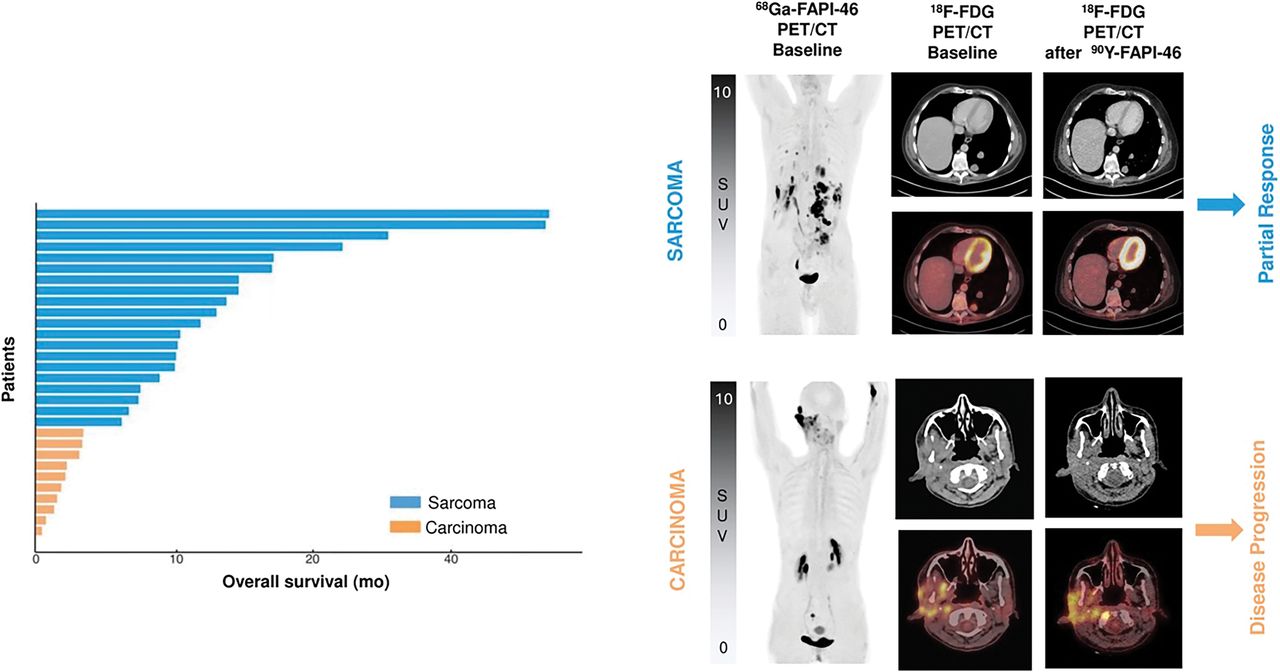
Thirty patients—23 (77%) with sarcoma, 3 (10%) with pancreatic cancer, 1 (3%) with prostate cancer, 1 (3%) with gastric cancer, 1 (3%) with nonmelanoma skin cancer, and 1 (3%) with cholangiocarcinoma—received a total of 77 cycles of 90Y-FAPI-46 radiopharmaceutical therapy between June 2020 and December 2023 and were followed until death or the last follow-up (April 2024). The median interval between cycles was 5 mo (interquartile range [IQR], 4 mo). Of the 30 patients, 11 (37%) received 4 or more cycles. A median of 3.7 GBq (IQR, 3.7–3.8 GBq) was administered during the first cycle, and a median of 7.4 GBq (IQR, 7.2–7.4 GBq) was administered for subsequent cycles. The mean absorbed dose was 0.48 Gy/GBq (SD, 0.06 Gy/GBq) in the kidneys and 0.04 Gy/GBq (SD, 0.01 Gy/GBq) in the bone marrow. Lesions with the highest uptake absorbed a mean dose of 2.4 Gy/GBq (SD, 1.04 Gy/GBq). After treatment, hematotoxicity of any grade was observed in 20 of 30 (67%) patients. Eight of 30 (27%) patients reached a Common Terminology Criteria for Adverse Events grade of at least 3, experiencing adverse events that included thrombocytopenia in 2 (6%), neutropenia in 2 (6%), anemia in 2 (6%), leukopenia in 1 (3%), and elevated γ-glutamyl transferase in 1 (3%) patient. RECIST (n = 25) and PERCIST (n = 20) responses after treatment were assessed. Disease control according to RECIST was 48% (12/25), including 3 partial responses (12%). Disease control correlated with extended overall survival (median, 14.6 vs. 1.9 mo). Metabolic response per PERCIST was observed in 12 of 20 (60%) patients.
Conclusion:
With long-term follow-up, the favorable safety profile of 90Y-FAPI-46 therapy is confirmed. Nearly half of the patients demonstrated disease stabilization, almost exclusively in sarcomas. Our findings support the role of FAP-directed radiopharmaceutical therapy in patients with metastatic sarcoma.
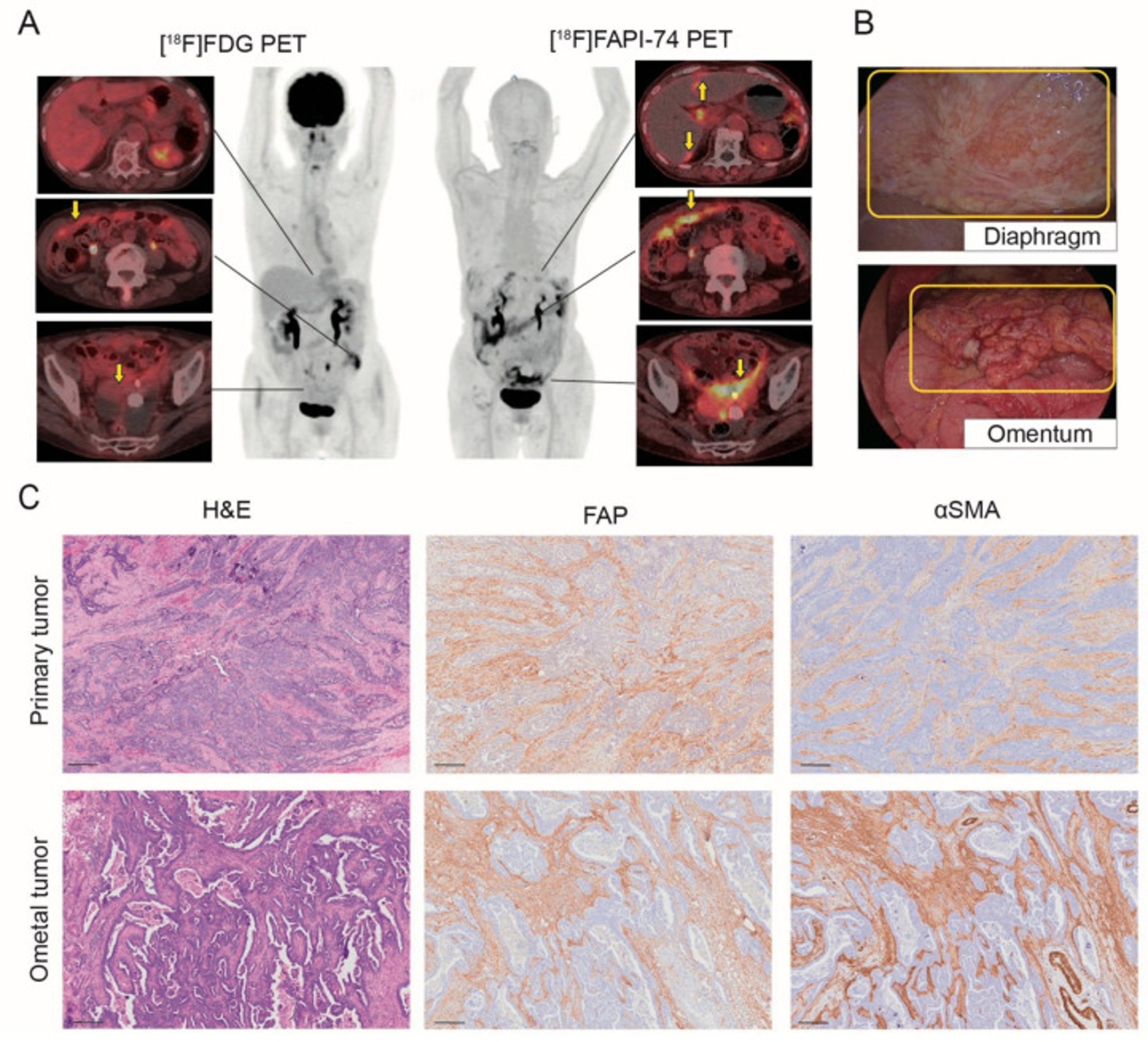
![[18F]FAPI-74 PET for Preoperative Assessment of Peritoneal Dissemination in Ovarian Cancer: A Case Series with Surgical and Histopathological Correlation](https://sofie.com/wp-content/uploads/2026/08/18FFAPI-74-PET-for-Preoperative-Assessment-of-Peritoneal-Dissemination-scaled-500x383.jpg)
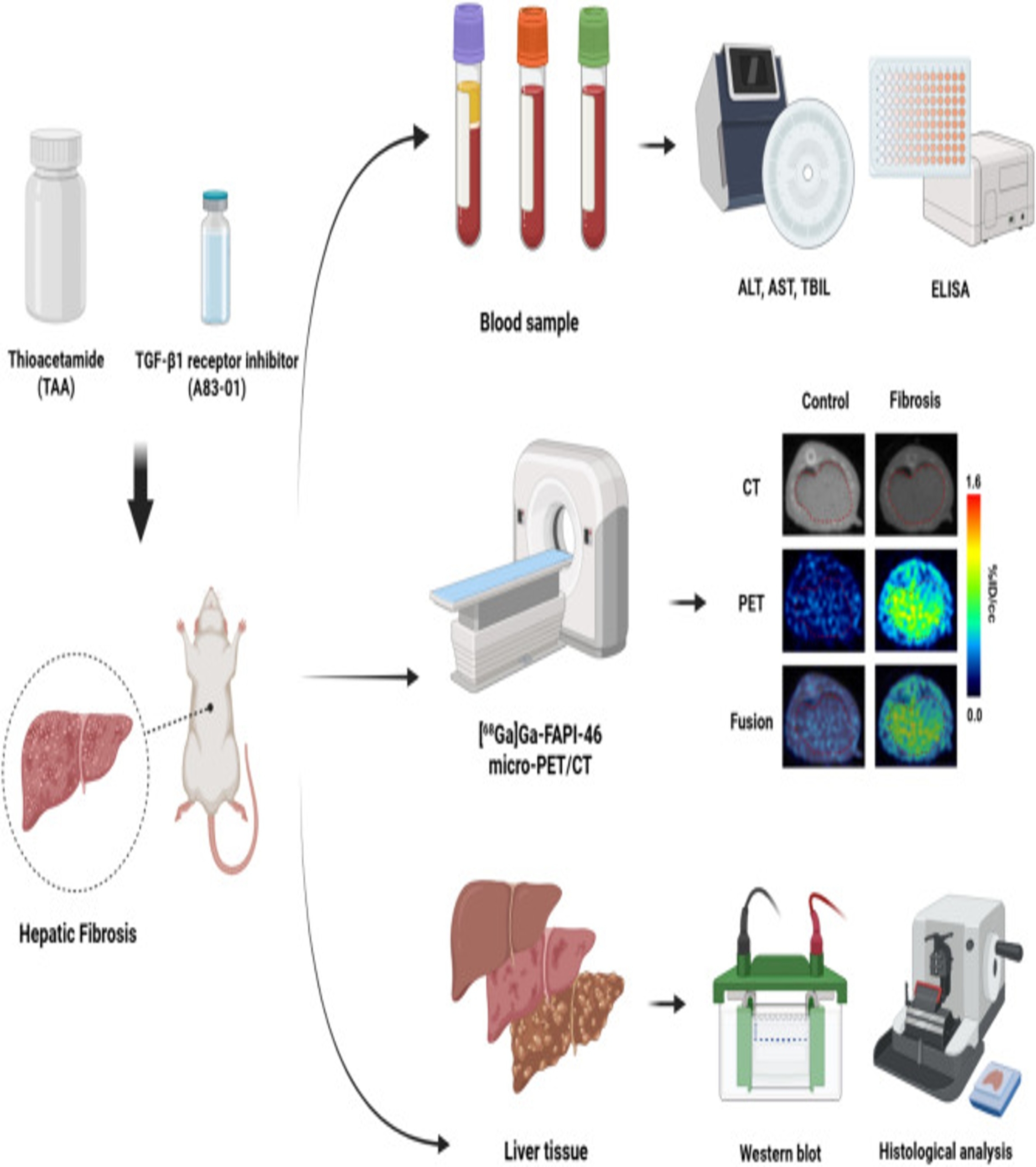
![[68Ga]Ga-FAPI-46 PET enables non-invasive monitoring of hepatic fibrosis progression during TGF-β inhibition](https://sofie.com/wp-content/uploads/2026/08/68GaGa-FAPI-46-PET-enables-non-invasive-monitoring-of-hepatic-fibrosis-scaled-500x383.jpg)
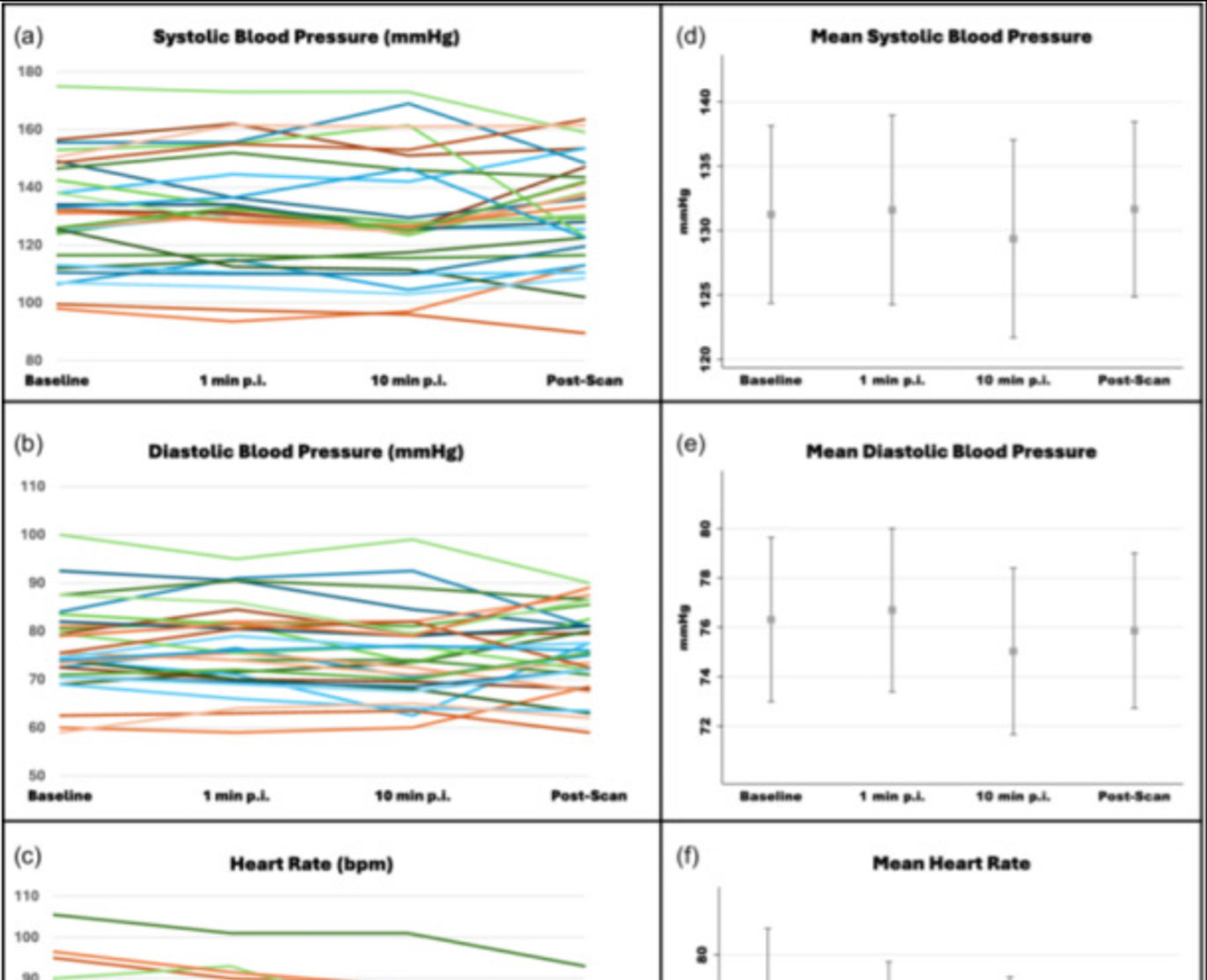
![Safety of [68Ga]Ga-FAPI-46 PET/CT including hemodynamic measurements and patient-reported outcomes in cancer patients](https://sofie.com/wp-content/uploads/2026/05/NewImage-500x383.jpg)
![A 3D co-culture model with fibroblast-restricted FAP expression for cancer therapy using [212Pb]Pb-FAPI-46](https://sofie.com/wp-content/uploads/2026/06/A-3D-co-culture-model-with-fibroblast-500x383.png)