![FAP Expression in Renal Tumors Assessed by [68Ga]Ga-FAPI-46 PET Imaging and FAP Immunohistochemistry: A Case Series of Six Patients from the Prospective Exploratory Trial NCT04147494](https://sofie.com/wp-content/uploads/2025/12/info.ibamolecular-scaled.jpg)
Adrien Holzgreve, Lena M Unterrainer, Kimberly Flores, Ethan C Lam, Christine E Mona, Johannes Czernin, Brian M Shuch, Anthony E Sisk Jr, Jeremie Calais
Abstract:
Fibroblast activation protein (FAP) has been proposed as a pan-tumor target for PET imaging using FAP-targeted tracers. Here, we explore the potential value of FAP PET in renal tumors.
Methods: Six patients with renal tumors (4 with clear cell renal cell carcinoma, 1 with papillary renal cell carcinoma, and 1 with renal oncocytoma) who were included in a prospective imaging study (NCT04147494) underwent [68Ga]Ga-FAPI-46 PET before nephrectomy. FAP PET radiotracer uptake and FAP expression by immunohistochemistry were assessed in the tumors and surrounding renal parenchyma.
Results: Tumoral FAP radiotracer uptake was highest in clear cell renal cell carcinoma (median SUVmax, 3.1; range, 2.5-5.3), followed by renal oncocytoma (SUVmax, 1.9) and papillary renal cell carcinoma (SUVmax, 1.1). The FAP PET signal strongly correlated with FAP expression by immunohistochemistry (SUVmax; r = 0.93; P = 0.007).
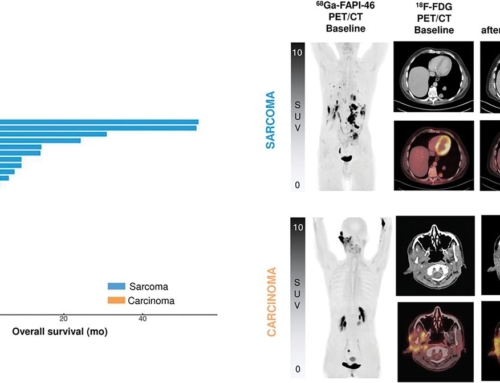
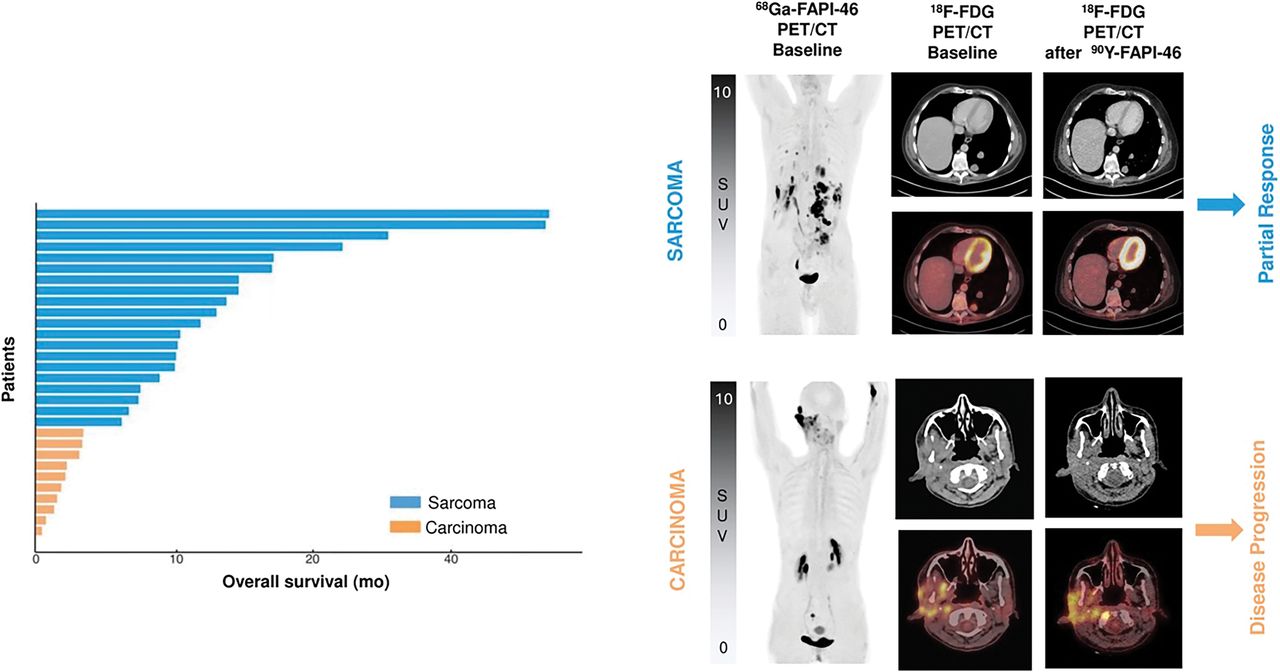
Conclusion: FAP expression in different renal tumors, including renal cell carcinoma, was lower when compared with cancers with known FAP expression, such as sarcoma. Although our data do not favor FAP-based theranostic approaches in renal cell carcinoma, studies in larger cohorts are warranted for conclusive evidence.